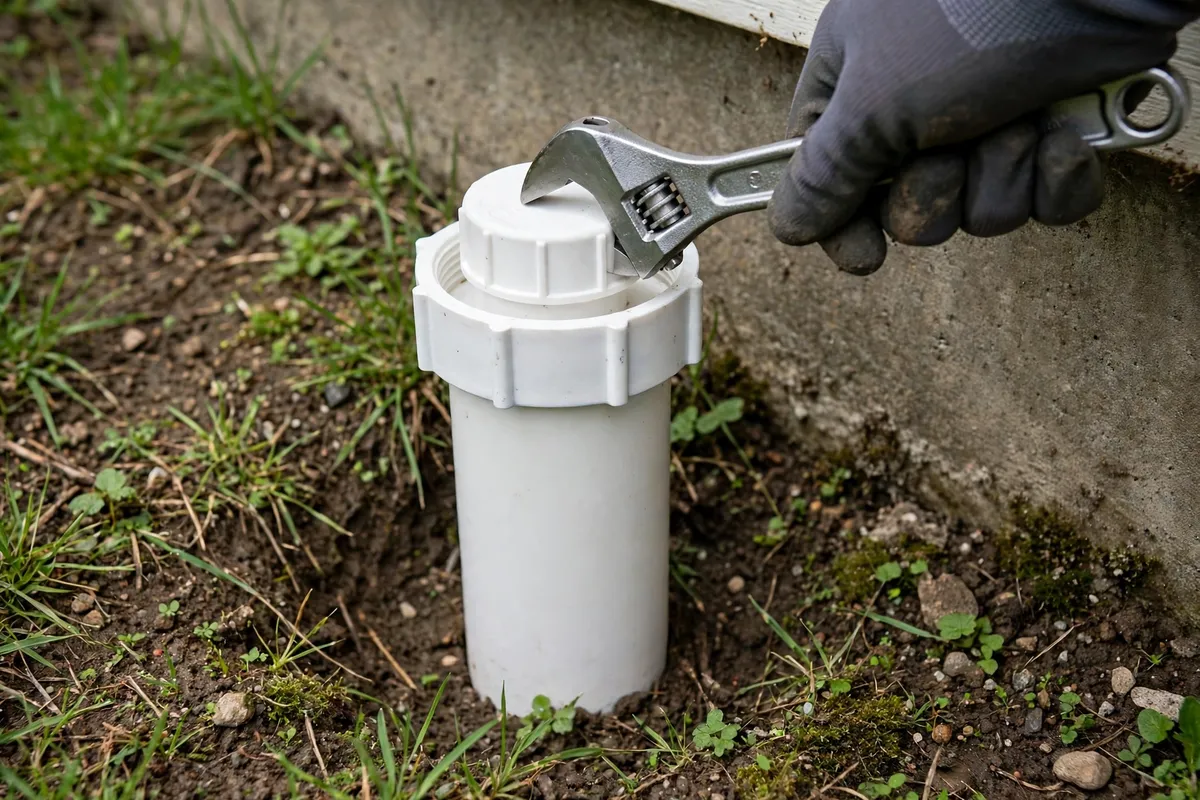
Somewhere near your foundation, or out in the yard, there is a short pipe sticking out of the ground with a cap on top. That is your sewer cleanout, and the cap on it does more work than it looks like. When that cap goes missing, cracks, or gets knocked off by a mower, the open pipe becomes an invitation: roots grow toward it, debris falls in, rain washes soil down it, and sewer odors drift out of it.
The cleanout exists so a plumber can reach your main sewer line without digging or pulling a toilet. The cap exists so the line stays sealed between visits. This blog explains what the cap does, how a missing or cracked cap causes backups and smells, and how to replace it correctly before a small plastic part turns into a sewer problem.
What a Sewer Cleanout Cap Does
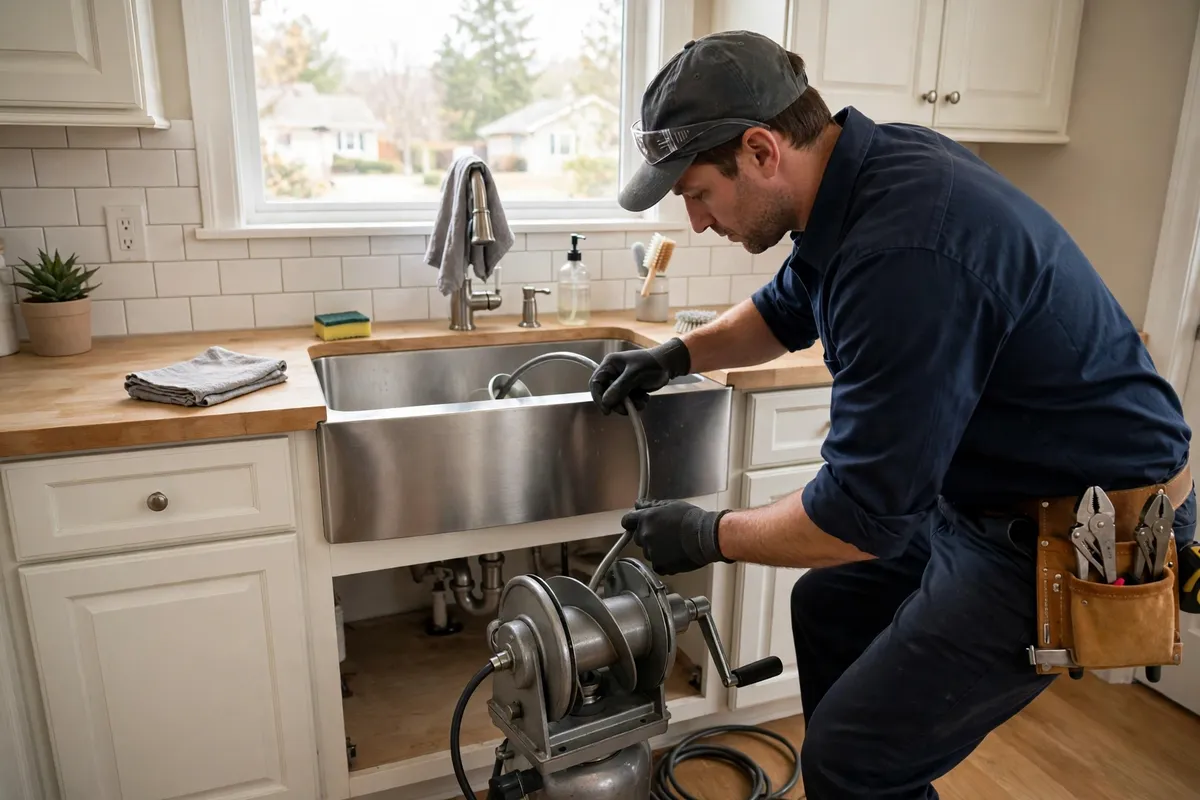
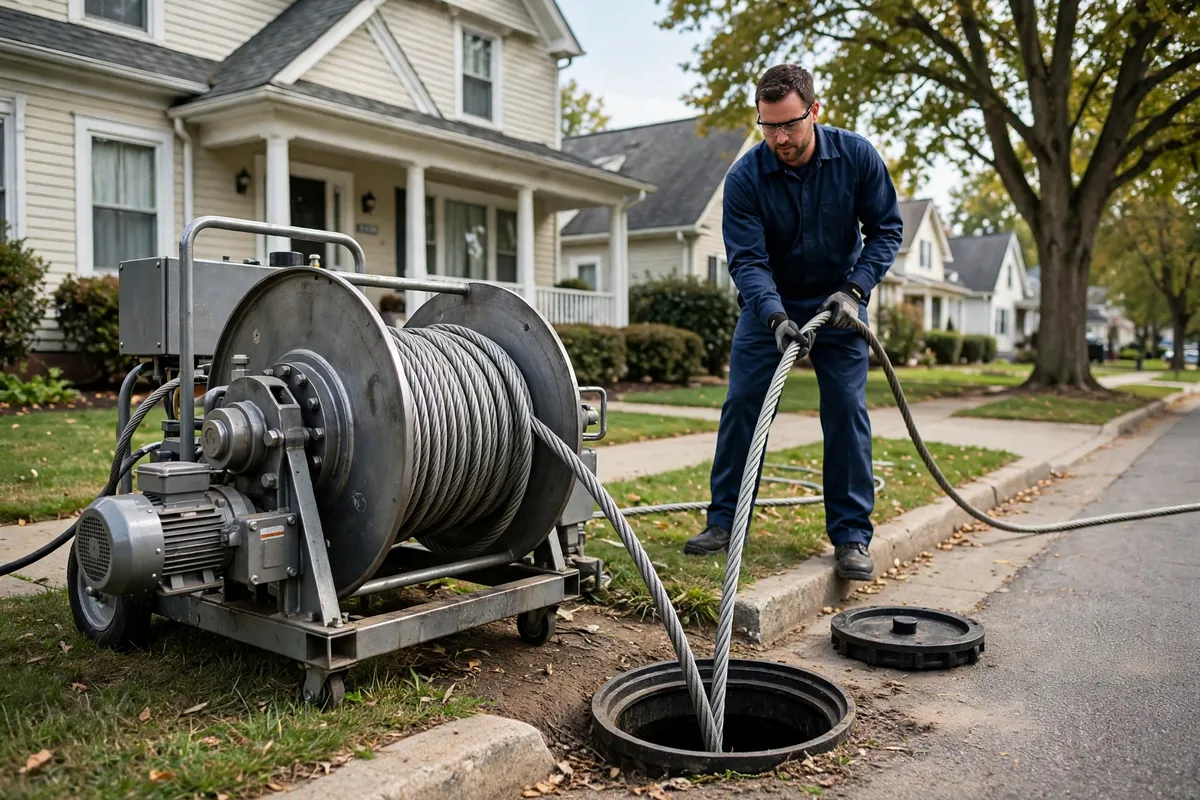
A cleanout is an access point: a capped opening in the main sewer line, usually near the foundation, in a basement floor, or in the yard between the house and the street. When the main line clogs, a technician opens the cap and runs a cable or a camera straight into the line. Without a cleanout, the same job means pulling a toilet or digging, both slower and messier.
The cap has three jobs. It keeps sewer gas in the pipe, where it belongs, instead of in your yard or basement. It keeps roots, soil, leaves, and critters out of the line. And it keeps the opening clean and threaded, so the next technician can open it without a fight. A cap that is doing all three jobs is easy to ignore, which is exactly why a missing one causes trouble quietly. Homes around Brookside and Christiana, where mature trees shade the yards, feel the root side of this first.
How a Missing Cap Invites Roots
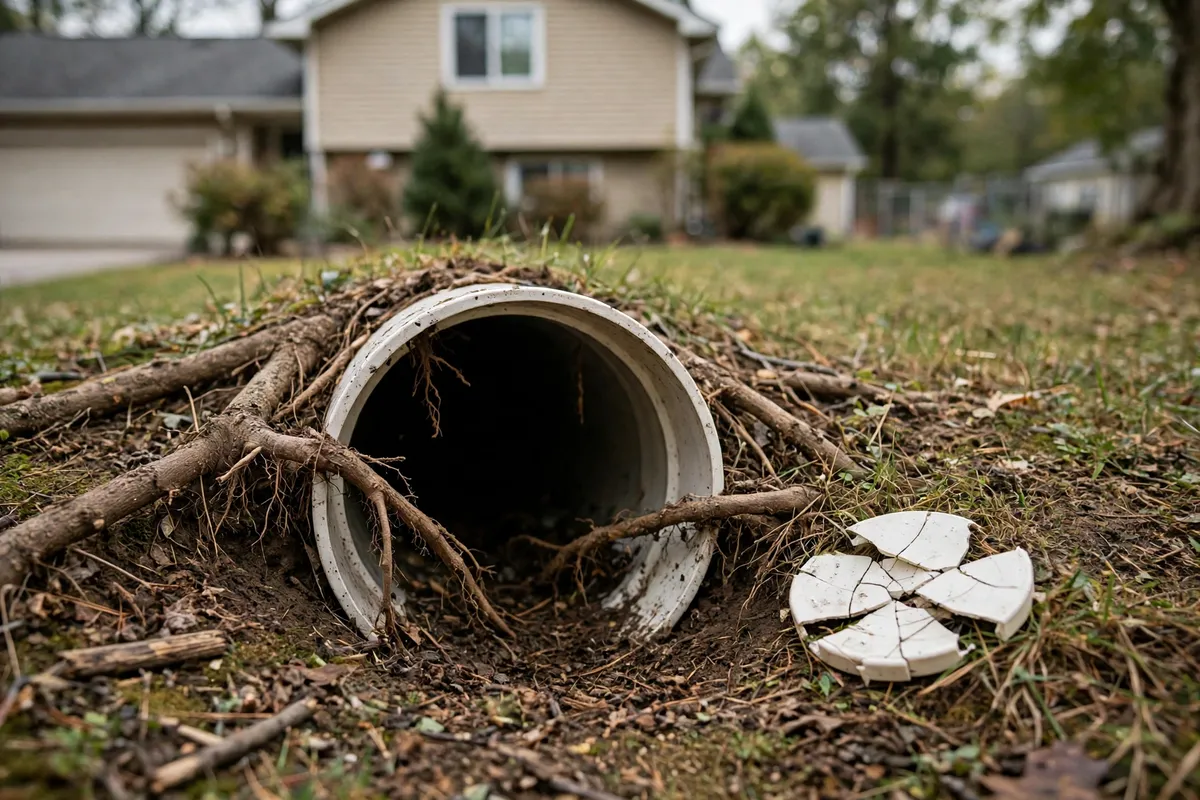
Tree roots hunt for water, and a sewer line is a reliable source. Roots normally enter through cracks and loose joints, but an open cleanout is an open door: the pipe opening sits at soil level, warm, damp, and full of nutrients, with root tips already nearby. Roots grow into the opening, then down into the line, where they spread into a mat that catches paper and grease.
That root mat narrows the line a little at a time. Drains slow down, then gurgle, then back up, usually at the lowest fixture in the house. By the time the backup arrives, the roots have been growing for a season or more. Read tree roots in the sewer line for the full pattern, and warning signs your sewer line needs repair if the slowdowns keep coming back after cleaning.
How a Missing Cap Causes Odors and Backups
Roots are only one of the three problems an open cleanout creates. The other two show up faster.
- Sewer odors. Sewer gas follows the path of least resistance. A sealed system vents gas through the roof stack; an open cleanout gives it a shortcut at ground level. The result is a sewer smell in the yard, near the foundation, or in the basement that comes and goes with the weather. If the smell shows up indoors at a sink instead, read why a kitchen sink smells.
- Debris and soil in the line. An open pipe at ground level collects whatever washes or falls toward it: soil, mulch, leaves, grass clippings, and gravel. Rain carries it down into the line, where it settles and narrows the pipe. A handful of soil per storm becomes a partial blockage within a year.
- Backups that start at the cleanout. When the main line restricts, sewage looks for the lowest opening. An open cleanout near the foundation can become that opening, spilling sewage into the yard or basement instead of backing up at a fixture. It is the same main line problem, with a messier exit. See main line vs branch line clogs for how to tell where a backup starts.
- Critters and insects. An open, damp pipe is shelter. Insects and small animals that get in can die in the line and become part of the blockage. A cap is a cheap lock on a door that should stay shut.
A cracked cap causes the same problems more slowly. The crack lets gas out and roots in while looking almost fine from a distance, which is why caps should be checked, not just glanced at.
How to Check Your Cleanout Cap
The check takes two minutes and a flashlight. Do it twice a year, and after any yard work near the pipe.
- Find the cleanout. Look near the foundation where the sewer leaves the house, in the basement floor near the main stack, or in the yard between the house and the street. The pipe is usually three or four inches wide with a cap on top, sometimes flush with the ground in a small cover box.
- Look at the cap. It should be present, uncracked, and seated evenly. A cap sitting crooked, a cap with a visible crack, or a pipe with no cap at all needs attention now, not at the next cleaning.
- Sniff and look inside if the cap is off. A strong sewer smell at the opening is normal for an open pipe; roots, soil, or standing water inside are not. If you see roots or debris, the line needs cleaning before a new cap goes on.
- Check after mowing and digging. Mowers, trimmers, and shovels are the usual cap killers. If yard work happened near the pipe, walk out and confirm the cap survived it.
Do not force a stuck cap with a big wrench. Old caps seize, and cracking the pipe fitting while removing the cap turns a small job into a plumbing repair. If the cap will not move by hand with reasonable effort, let a technician free it.
How to Replace a Cleanout Cap Correctly
Replacing a cap is a small job with a few ways to get it wrong. The right cap, seated correctly, seals the line for years.
- Match the size and thread. Cleanout caps come in standard sizes, most often three or four inch, with threads that must match the pipe fitting. Take the old cap, or a photo and a measurement of the opening, when you buy the replacement. A cap that almost fits will leak gas and invite roots at the gap.
- Clean the rim and threads. Brush soil and grit off the pipe rim and threads before the new cap goes on. Grit in the threads stops the cap from seating, and a cap that cannot seat cannot seal.
- Snug it, do not crush it. Hand tight plus a small turn with a wrench is enough for a plastic cap. Overtightening cracks plastic caps, which is how many of them failed in the first place. The cap needs to seal, not to survive a torque contest.
- Confirm the seal. After the cap is on, check that it sits evenly all the way around with no gap, and give it a firm tug. If sewer odor lingers at the pipe a day later, the cap is not sealing or the problem is deeper in the line.
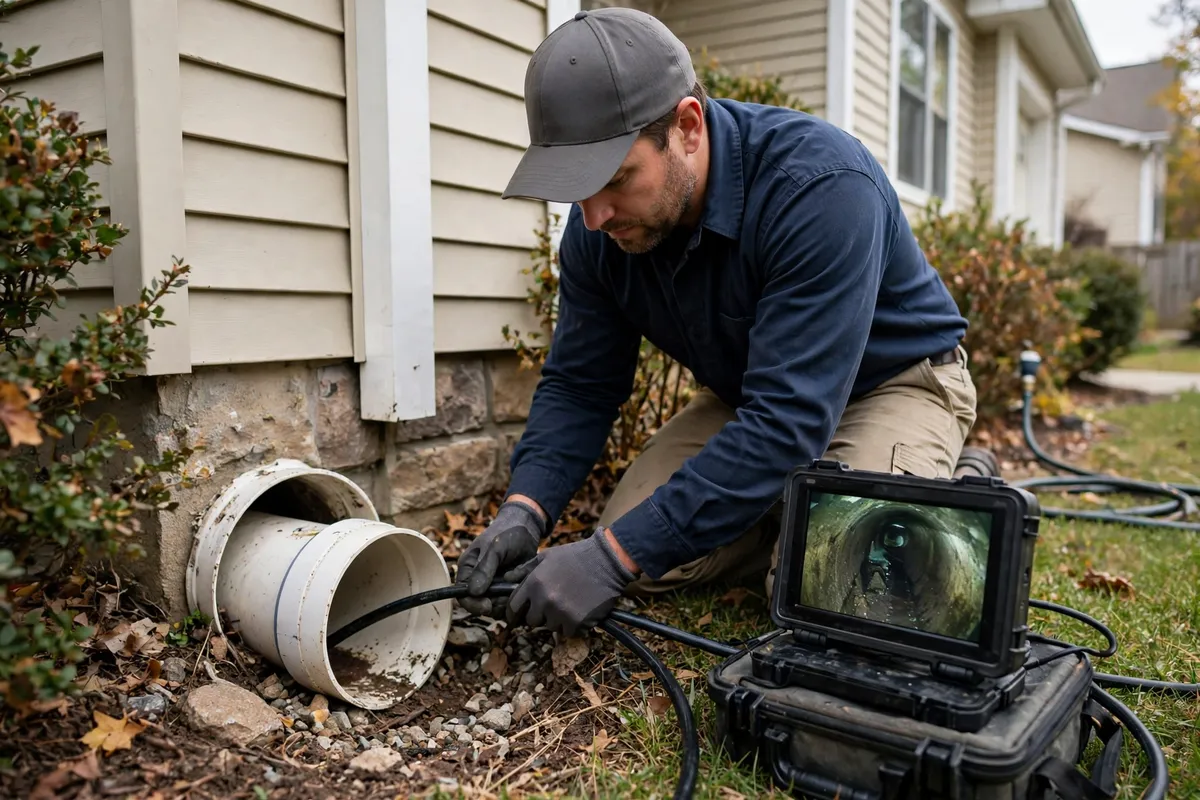
If the pipe itself is cracked, the threads are damaged, or roots have already entered, a new cap alone will not fix it. A sewer camera inspection through the cleanout shows what got in and how far it spread, and hydro jetting can clear roots and debris that a cable only pokes through. See hydro jetting vs drain snaking for which tool fits. Homes near Bear and New Castle with big yard trees should pair the cap replacement with a camera look as a matter of routine.
When a Cap Problem Is Really a Line Problem
A missing cap is a cause, not always the whole story. If drains stay slow after the cap is replaced and the line is cleaned, or if backups return within a season, the line itself likely has cracks, loose joints, or root entry points beyond the cleanout. At that point the cap was the messenger. Read how often Newark homes should get drains professionally cleaned to set a schedule that catches these problems early, and cast iron pipe problems in older homes if your line is original to an older house.
The cap itself is a small, cheap part doing a quiet, important job: sealing the main line against roots, debris, and gas. Check it twice a year, replace it when it cracks, and keep it seated. If sewage is already backing up, stop using water in the house and read what to do first for a sewage backup before anything else.