Most Newark homeowners only think about drain cleaning when a drain stops working. By then, the buildup inside the pipe has been growing for months or years, and the cleaning becomes a repair call instead of maintenance. A professional cleaning on a schedule prevents most of those calls, and the right schedule depends mostly on the age of the home and how hard the drains work.
Drains do not clog all at once. Grease, soap, hair, and food scraps coat the inside of the pipe a little at a time, and the opening narrows until water that used to flow freely starts to slow down. This blog sets out a cleaning schedule by home age and use, the signs that it is time, and what a professional cleaning includes, so you can plan the work instead of reacting to it.
Why Drains Need Cleaning on a Schedule
A drain pipe is not a smooth tube for long. Every shower leaves soap and hair, every kitchen sink leaves grease, and every laundry load leaves lint. In a new plastic pipe that film builds slowly. In an older cast iron pipe, the rough, corroded walls catch everything that passes, and the buildup grows fast.
Newark has plenty of older housing stock, especially around Brookside and Christiana, where cast iron drain lines from decades ago are still in service. Those pipes need cleaning more often than the plastic lines in newer builds, not because the homeowners do anything wrong, but because the pipe walls themselves hold onto buildup. Read cast iron pipe problems in older homes for why age matters so much.
A Cleaning Schedule by Home Age and Use
No single schedule fits every home, but these starting points work for most Newark houses. Adjust from there based on what the first cleaning finds.
- Newer homes with plastic pipes. Every two years is usually enough for a home under about twenty years old with a small household. The smooth pipe walls shed buildup, and a cleaning every other year keeps the film from gaining a foothold.
- Older homes with cast iron pipes. Plan on yearly cleaning. Rough pipe walls, early corrosion, and decades of buildup mean the line narrows faster, and a yearly visit keeps it open. If the first cleaning pulls out heavy scale, stay yearly.
- Large families and heavy use. More people means more showers, more laundry, and more cooking grease. A busy household should clean yearly regardless of pipe age, because use matters as much as age.
- Homes with trees near the sewer line. Roots hunt for water and find the smallest crack or loose joint in a sewer line. If trees stand near the line, yearly cleaning plus a camera check keeps roots from turning into a backup. Read tree roots in the sewer line for the warning signs.
- Homes that have backed up before. A home with a history of backups has told you its schedule already: yearly at minimum, until two clean inspections in a row say otherwise. A backup is the pipe asking for a shorter interval.
Commercial kitchens and food businesses run on a different clock entirely, with grease traps on their own schedule. See grease trap maintenance: how often if that is your situation.
Signs It Is Time, Whatever the Calendar Says
A schedule is a starting point, not a promise. Pipes give warnings before they fail, and a cleaning that waits for the calendar while the drains complain is a cleaning that comes too late.
- Drains run slower than they used to. A sink or shower that empties slowly, week after week, has buildup narrowing the pipe. Read why drains run slow for the full list of causes.
- Gurgling sounds. Air bubbling through traps means the system is struggling to breathe, often because buildup is restricting flow. A gurgle that shows up in dry weather points at the drain, not the vent.
- Smells from the drain. A sour or sewer smell at a sink or shower means buildup and biofilm are sitting in the pipe. Cleaning removes the source; air fresheners only cover it.
- Water backs up in the lowest fixture. When the basement floor drain or the ground floor shower backs up while other fixtures drain, the main line is restricting. That sign jumps the schedule: book the cleaning now, not at the next interval.
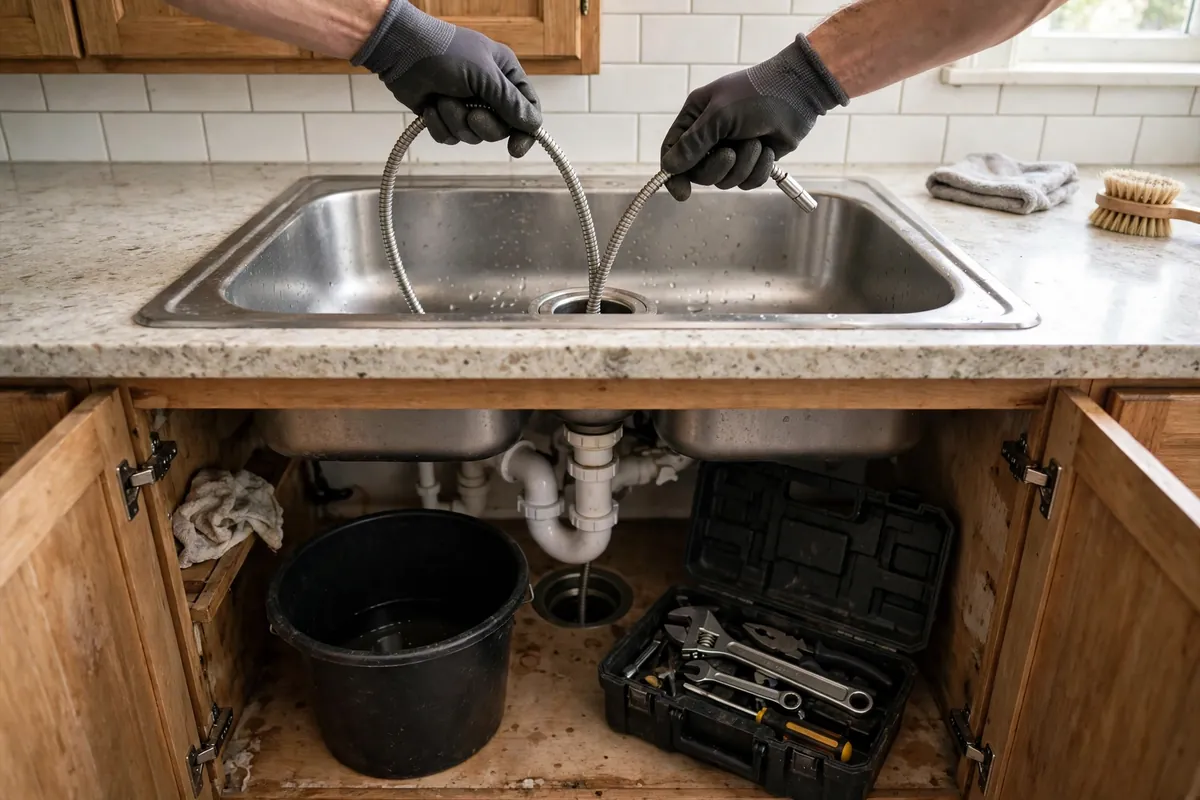
- One fixture clogs again and again. A shower or sink that clogs every few months has a branch line that needs more than a plunger. Repeated clogs in one spot mean buildup the plunger cannot reach.
If several of these signs show up together, the problem may be the main line rather than a single branch. Main line vs branch line clogs explains how to tell which one you have.
What a Professional Cleaning Includes
A professional cleaning is more than running a cable until the water moves. Done properly, it clears the buildup, checks the pipe, and tells you what to expect next.
- A look before the work. The technician asks which fixtures are slow, checks the cleanout, and decides whether the job needs a cable, a jetter, or a camera first. Homes near Bear and New Castle with mature trees often start with the camera.
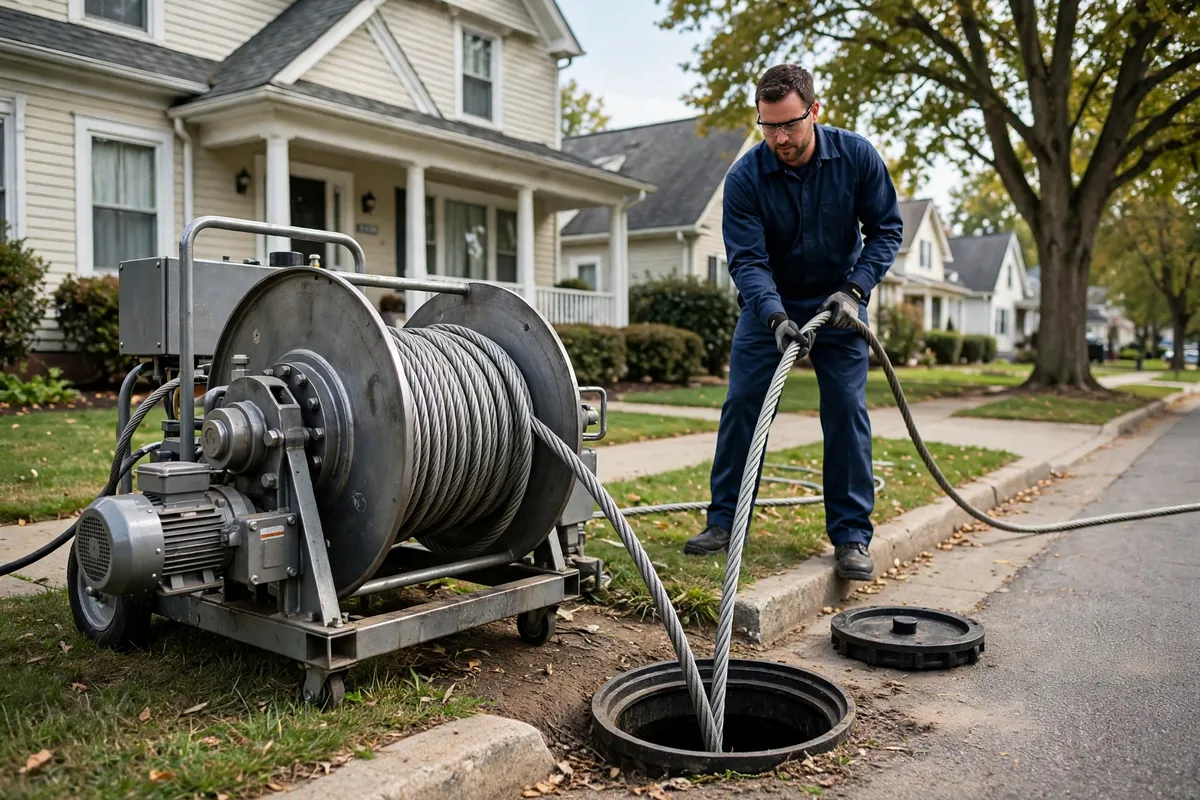
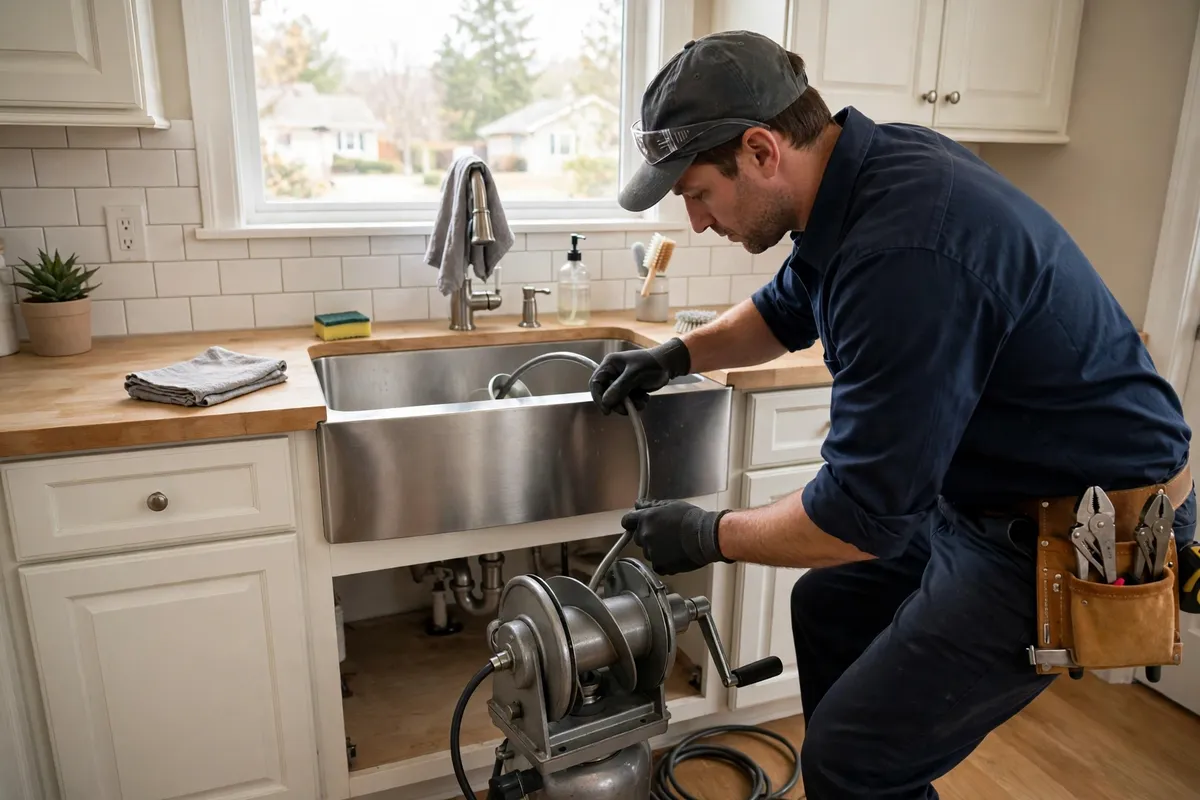
- Clearing the line. A drain cable breaks up and pulls out the buildup. For heavy grease or scale coating the whole pipe wall, hydro jetting scours the walls clean instead of poking a hole through the middle. See hydro jetting vs drain snaking for which tool fits which job.
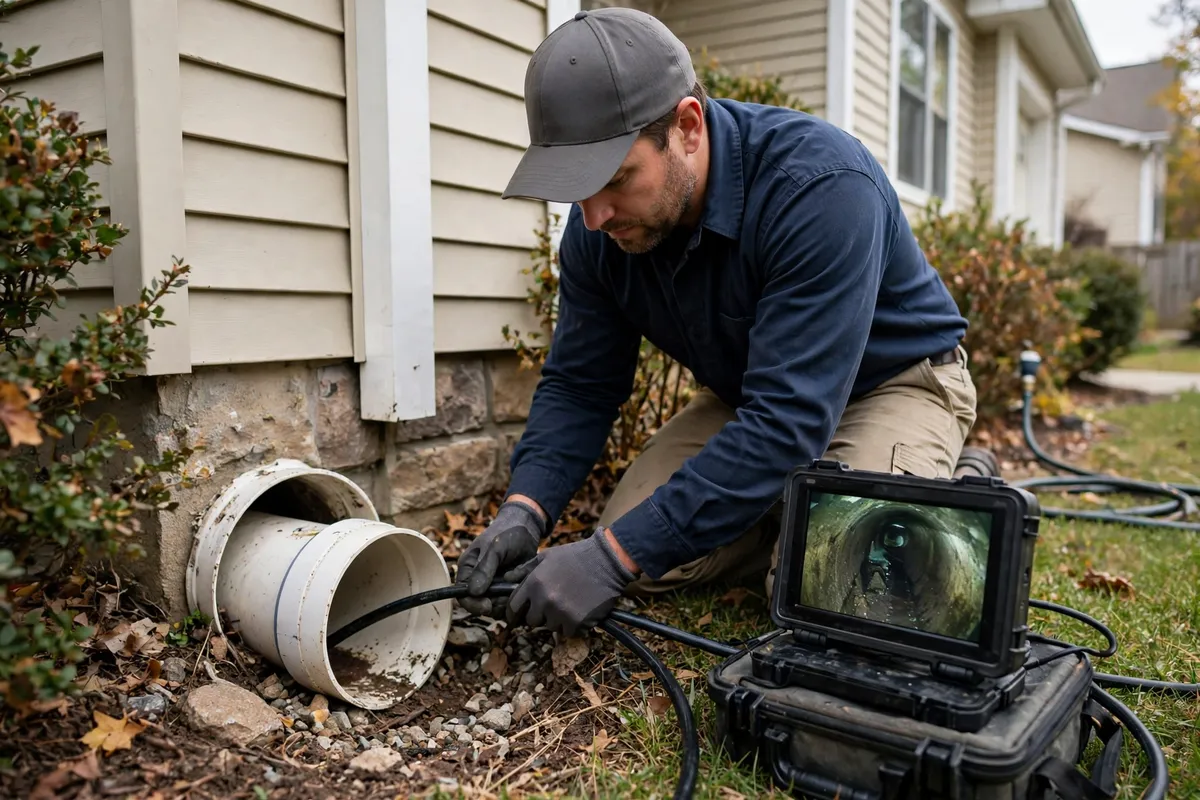
- A camera check when it matters. A sewer camera inspection shows roots, cracks, bellies, and heavy scale that cleaning alone cannot fix. It also confirms the line is actually clean, not just open for now.
- A flow test. Water runs through the cleaned line at full volume while the technician watches the lowest fixtures. A line that passes a flow test is a line that will handle a normal week of use.
- A straight answer on the interval. What came out of the pipe sets the next schedule. Light film means you can stretch the interval; heavy scale or roots mean you should shorten it.
What Cleaning Cannot Fix
Cleaning removes buildup. It does not repair a cracked pipe, lift a sagging line, or stop roots that enter through a broken joint. If a camera shows damage, cleaning buys time but the repair conversation still needs to happen. Homes that back up within months of a thorough cleaning usually have a structural problem, and warning signs your sewer line needs repair lists what to watch for.
Skip the chemical shortcuts between cleanings. Bottled drain cleaners rarely clear real buildup, and they can damage older pipes. Read how chemical drain cleaners damage pipes before reaching for one. And mind what goes down the kitchen sink in the first place: what never to put down the garbage disposal covers the worst offenders.
Setting Your Schedule and Sticking to It
Pick the interval that matches your home: yearly for older pipes, heavy use, trees near the line, or a backup history; every two years for newer plastic pipes and light use. Put it on the calendar the way you would a furnace service, and let the findings from each visit adjust the next one.
A drain cleaned on schedule rarely becomes an emergency. If sewage is already involved, stop using water in the house and read what to do first for a sewage backup before anything else. Otherwise, the rule is simple: clean the drains before they ask, and they will not ask loudly.