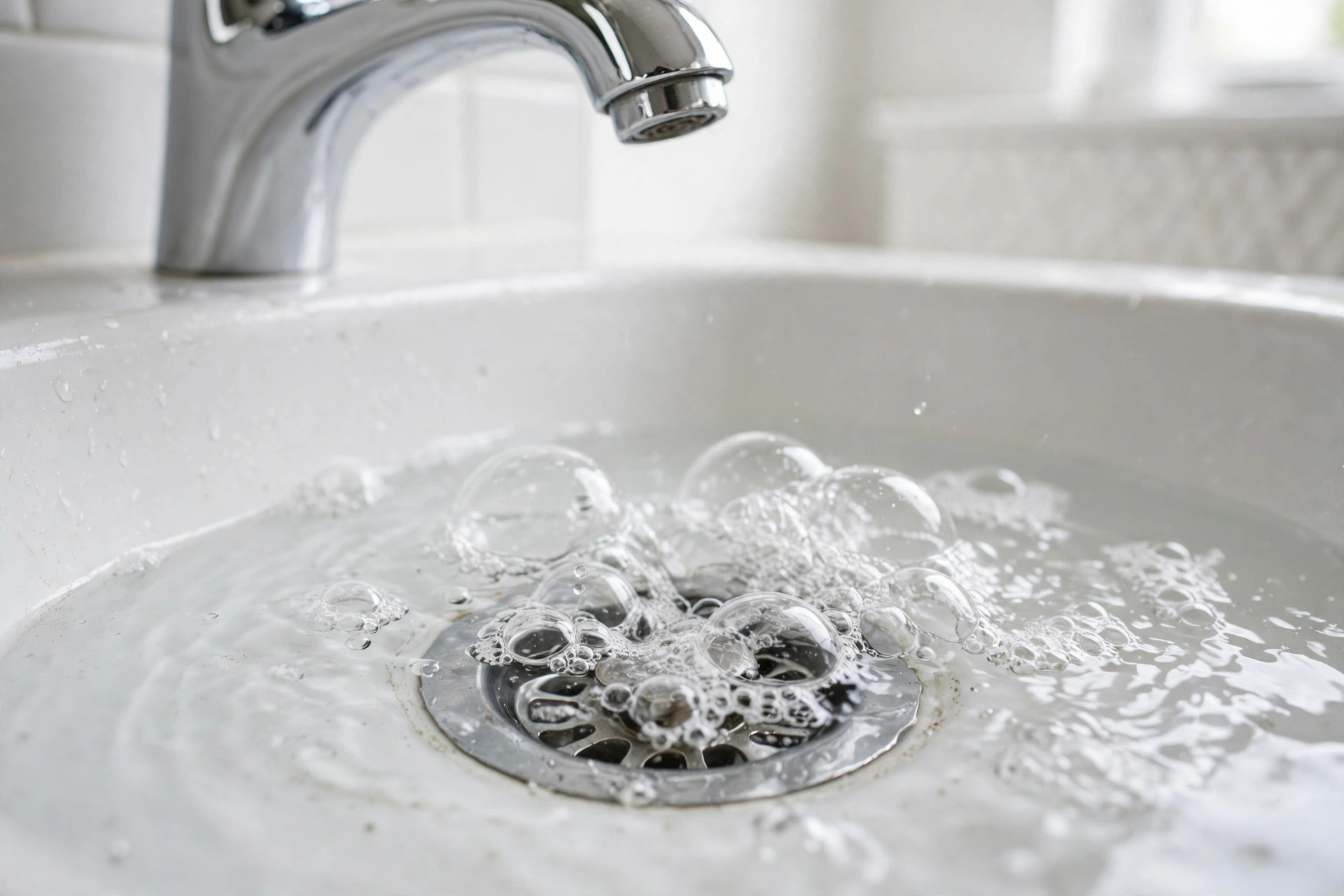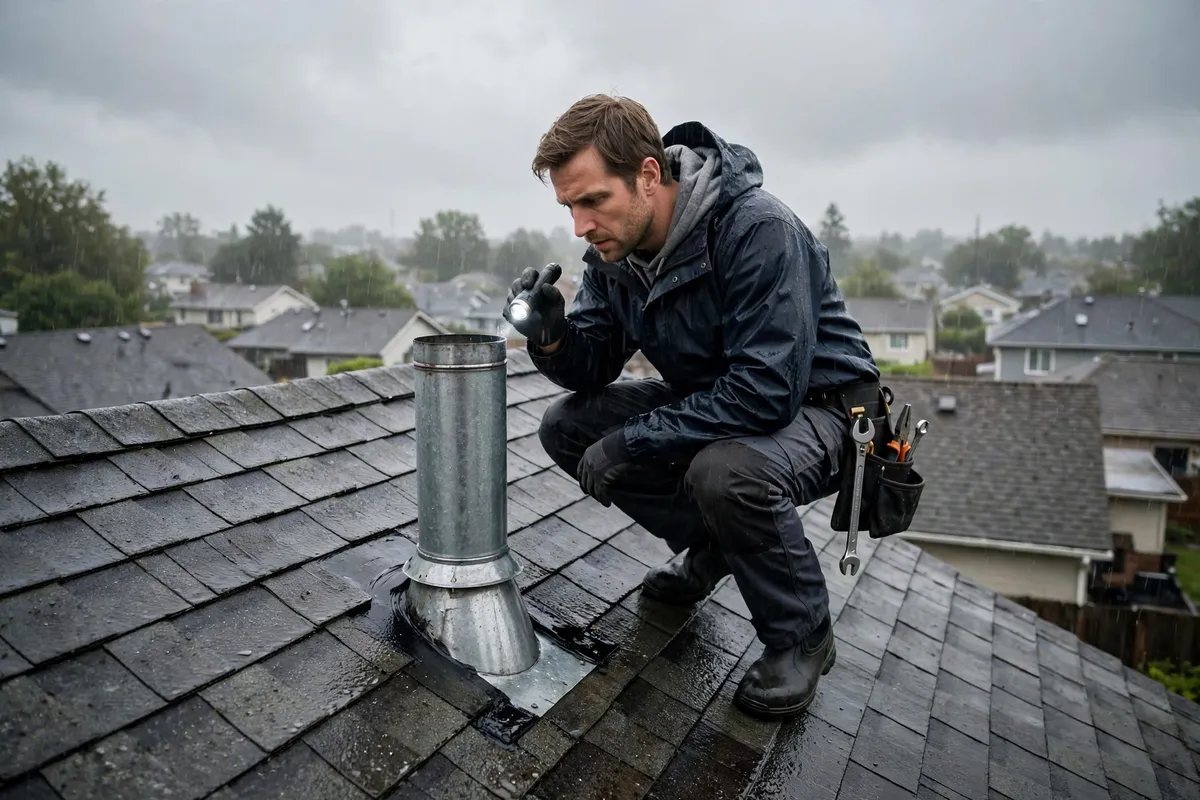
Rain hammers the roof, the gutters overflow, and inside the house the drains start talking: a gurgle from the kitchen sink, a bubble in the toilet, a glug from the shower drain. It happens every heavy rain and never on a dry day, which makes it easy to blame the storm. Most of the time the storm is only the trigger. The real problem is the vent stack on the roof, and rain is what exposes it.
Every drain in a Newark home connects to a vent stack, a pipe that runs up through the roof and lets air in and out of the plumbing system. When that stack is blocked, the system cannot breathe, and the drains gurgle as air gets pulled through the water in the traps. This blog explains how a vent stack works, why heavy rain makes the gurgling worse, and when snaking is not the fix.
How a Vent Stack Works, and Why Rain Breaks It
A drain needs air as well as water. When water runs down a drain, the vent stack supplies that air from the roof. Without it, the water would siphon the traps dry and pull sewer gas into the house.
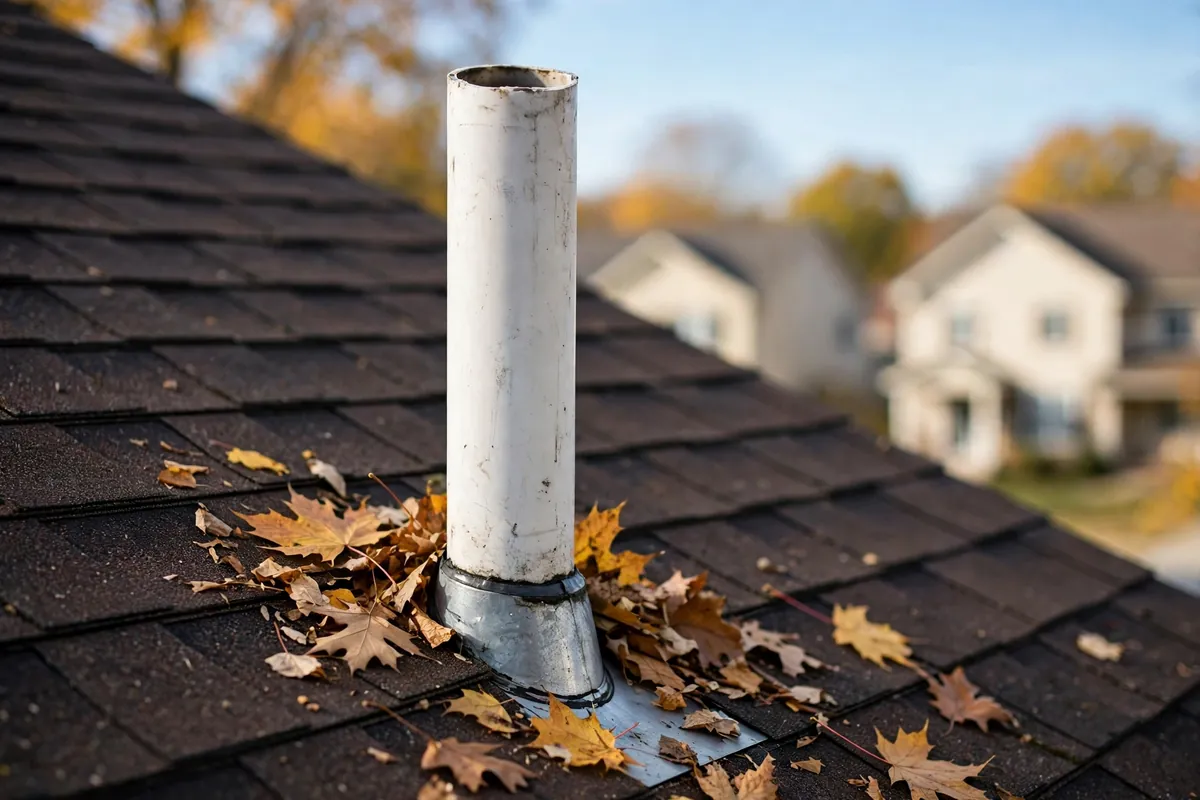
A blocked stack breaks both jobs at once. Leaves, nests, and debris clog the opening, and the system starts pulling air through the nearest trap instead of the roof. That is the gurgle: air bubbling through the water seal in a trap. The blockage can be partial, so the drains work fine on a dry day and fail only when the system is under load. Rain is that load, because it sends a surge of water into the system all at once, and a partly blocked vent cannot keep up. Homes around Brookside and Christiana, where mature trees overhang the roofs, see this pattern often: the stack that worked all summer clogs with leaves by the first autumn storm.
Why Heavy Rain Makes the Gurgling Worse
Heavy rain hits the plumbing system from two directions at once. From above, rain pours into the vent stack opening, and if the stack is partly blocked, that water pools above the blockage and seals the vent shut. From below, rainwater fills the yard drains and the municipal sewer, raising the water level in the whole system.
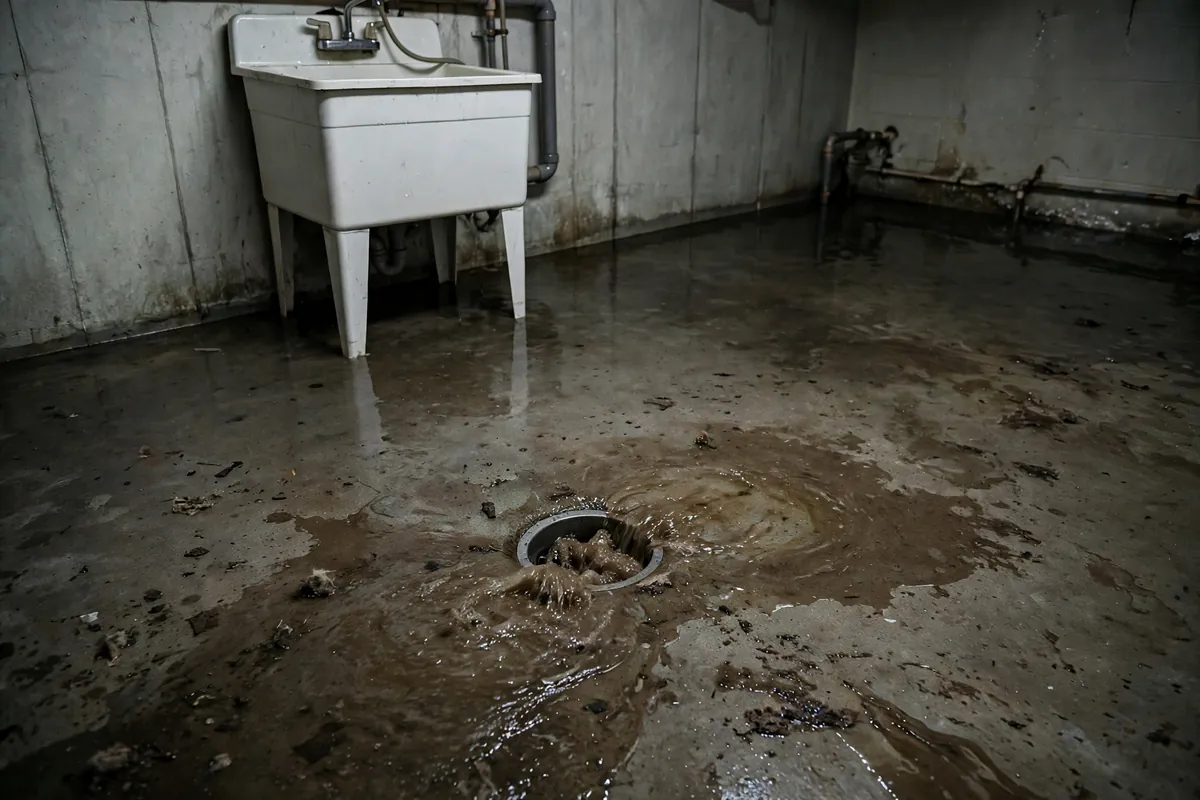
That is why the gurgle follows the rain. A drain that gurgles only in heavy rain has a vent problem, not a clog problem, because a clog would gurgle on dry days too. The lowest trap in the house, usually a basement floor drain or a ground floor shower, gurgles first and loudest. If the basement floor drain bubbles during a storm, read why a basement floor drain backs up during heavy rain.
Gurgle Signs That Point at the Vent
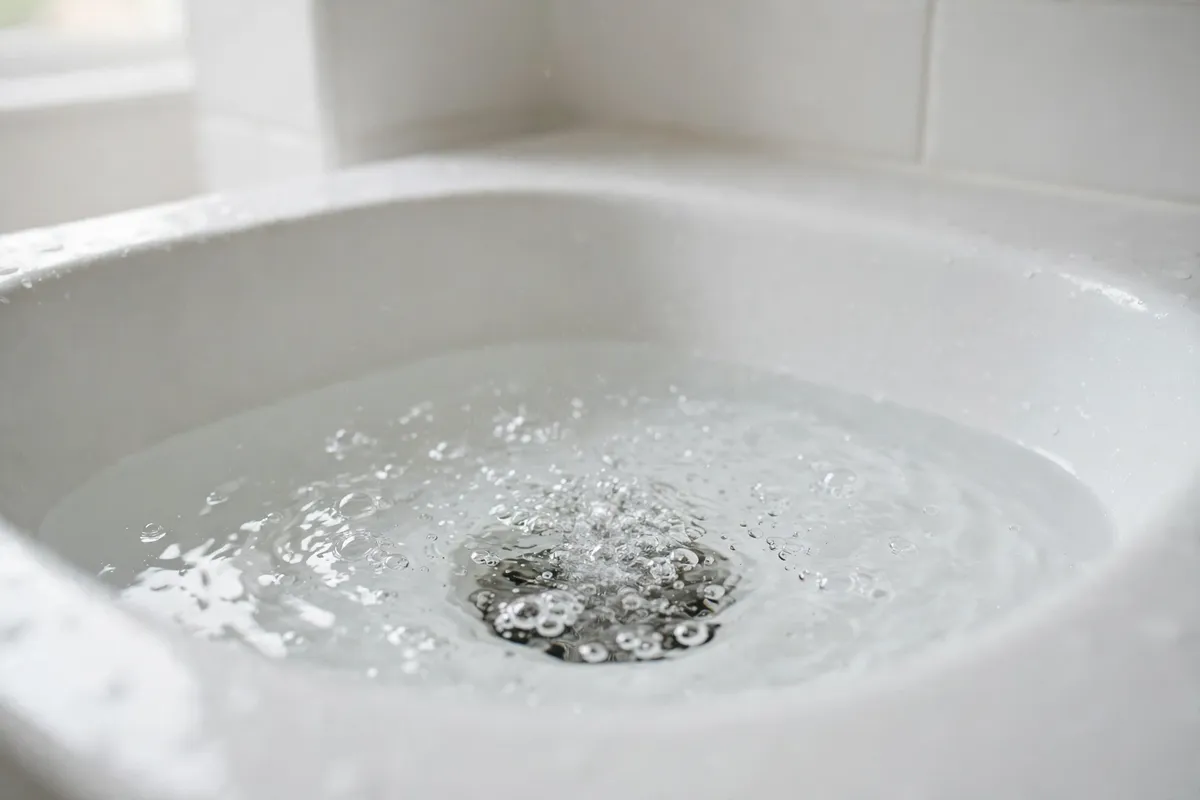
Not every gurgle means a blocked vent, but a few signs point straight at it. The pattern matters more than any single sound.
- Several fixtures gurgle together. The kitchen sink, the toilet, and the shower all make noise during the same storm. One clogged drain affects one fixture; a blocked vent affects the whole system.
- The gurgle follows heavy rain only. Dry days are quiet, storm days are noisy. A clog would complain every day, not just when it rains.
- The toilet bubbles when another fixture drains. Run the washing machine and the toilet water level jumps or bubbles. That is air moving through the system looking for an exit.
- Sewer smells come with the sound. A trap that has been siphoned dry lets sewer gas into the room. If the smell follows the gurgle, the trap seal is being pulled out.
- The lowest drain gurgles first. A basement floor drain or ground floor shower makes the most noise, because it sits closest to the rising water.
If only one fixture gurgles and it does so on dry days too, the problem is more likely a partial clog in that branch line. Read why a sink gurgles when you flush for the single-fixture version, and why drains run slow if the gurgle comes with slow drainage.
Vent Checks You Can Do From the Ground
You can check a vent stack without climbing on the roof, and you should, because a wet roof in a storm is no place for a ladder. Start from the ground with binoculars.
- Find the stacks. Look for straight pipes, usually two to four inches wide, rising through the roof above the bathrooms and kitchen. A typical Newark home has one or two.
- Check the opening. Look for a visible cap, a nest, leaves, or debris blocking the top. A stack buried under leaves is a prime suspect.
- Watch the drains during the next rain. Note which fixtures gurgle and in what order. The pattern tells a pro which stack serves the noisy fixtures.
- Run water in the quiet fixtures. If a guest bathroom that never gets used gurgles during a storm, its trap may be dry. Run water in every fixture for a minute.
Do not climb on a wet roof, and do not push a hose or a cable down a vent stack from above. A hose can push a blockage deeper, and a cable can damage the pipe. If the stack looks blocked from the ground, the next step is a professional look, not a ladder.
When Snaking Is Not the Fix
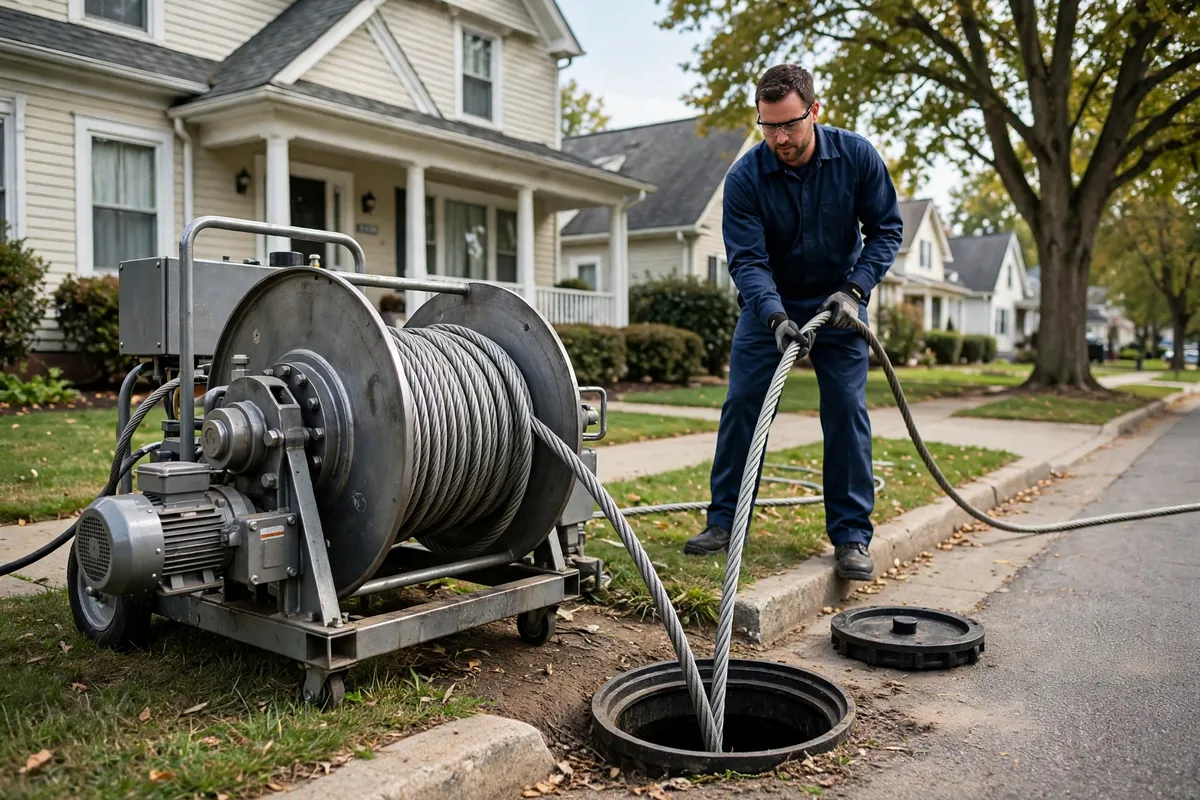
Snaking clears a clog in a drain pipe. It does nothing for a blocked vent stack, because the blockage is not in the drain: it is in the air pipe on the roof. Running a cable down a gurgling drain when the vent is blocked clears nothing, and the gurgle comes back with the next storm. That is the most common mistake with rain gurgling: the drain gets snaked, the weather clears, and the homeowner thinks the fix worked until the next heavy rain.
What fixes a vent problem is clearing the stack itself: removing the nest, the leaves, or the debris from the opening, and checking the pipe for damage or a cap that was installed wrong. A sewer camera inspection can confirm the vent path from below, and it shows whether the problem is the vent or a deeper main line issue. If several fixtures back up with water, not just air, the problem may be the main line, and main line vs branch line clogs explains how to tell. Hydro jetting suits a coated main line, not a blocked vent. See hydro jetting vs drain snaking for which tool fits which problem.
What Else Gurgles, and How to Tell the Difference
A blocked vent is the usual cause of rain gurgling, but it is not the only one. A partial main line blockage can gurgle in rain too, because the rain raises the water level in the sewer. The difference is what comes with the sound: a main line problem brings slow drains and water backing up, while a vent problem brings noise and smells with drains that still run at normal speed.
- Vent problem. Gurgling in rain, several fixtures at once, drains run at normal speed, sewer smells after the storm. Fix: clear the stack.
- Main line problem. Gurgling plus slow drains, water backing up in the lowest fixture, problems that get worse over weeks, not just in storms. Fix: camera inspection, then snaking or jetting.
- Dry trap. Gurgling and smells from one unused fixture, usually a guest bathroom or a basement floor drain. Fix: run water to refill the trap.
- Biofilm and slow drains. Gurgling in one slow drain with a smell of decay. Fix: clean the film and restore flow, as drain flies in Newark homes show.
Do not pour chemical drain cleaner into a gurgling drain. It rarely clears a vent problem, because the blockage is not in the drain, and it can damage pipes. Read how chemical drain cleaners damage pipes before reaching for a bottle.
Getting the Vent Clear Before the Next Storm
Vent problems are cheapest to fix before the next storm, not during it. Once you have the pattern, a pro can clear the stack from the roof on a dry day, check the cap, and confirm the drains run quiet. The visit also covers what the ground check cannot: the pipe joints and the cap fit.
Homes near Bear and New Castle, where mature trees shed leaves onto the roofs every autumn, should have the stacks checked each fall, before the storm season starts. Either way, the rule holds: a drain that only complains in the rain is telling you about the air, not the water. If sewage is involved, stop using water in the house and read what to do first for a sewage backup before anything else.
A gurgling drain in the rain is the house asking for air. Clear the vent, refill the traps, and the next storm passes quietly.